
Georgia Parole Board Authority
The State Board of Pardons and Paroles is Georgia's statewide parole-decision authority. A Brooks County conviction may lead to a GDC prison sentence, after which the board considers parole only if the person is legally eligible. Brooks County courts impose sentences, but they do not run the later state parole review. DCS supervises parole in the field after release, but it does not grant parole.
Parole is conditional community release from a state-prison sentence before the full sentence relationship ends. It differs from probation, which comes from a court order and may replace or follow confinement. It also differs from bond, which releases a local detainee while the criminal case continues. These paths can all remove a name from the Brooks County jail roster, yet only one is a state parole release.
| Decision or status | Controlling source |
|---|---|
| State-prison sentence | Brooks County judgment and GDC record |
| Parole eligibility and decision | State Board of Pardons and Paroles |
| Actual prison release | GDC status and release record |
| Field supervision | Georgia DCS |
| Probation sentence | Sentencing court, not the parole board |
Verify a Georgia Parole Release
Begin with jurisdiction. Someone who merely bonded out of Brooks County Jail is not a parole case. Search the official GDC query for the person and match the GDC ID, birth details, offense, conviction county, sentence, and photo when present. Review current status and release-related fields before interpreting board information.
- Confirm a Georgia state-prison sentence in the Brooks County court record.
- Search GDC offender records and match identity.
- Read the official parole process.
- Distinguish a tentative parole month from a final board decision.
- Confirm actual release through the latest GDC status or release field.
- Use DCS field channels only after release to parole.
Names repeat, and older public facts can remain visible after a status changes. Compare multiple identifiers and the latest agency record. VINELink may report a custody change from a participating source, but it does not replace the board decision or GDC release record. The Brooks County jail release sheet is useful only for the earlier local booking or transfer.
Georgia Parole Board Records
The board's official public site is the stable source for parole authority, process explanations, public meetings, agency publications, and current contact routing. Individual parole review is not always displayed like a court docket. Public access to a named person's deliberative or case material may be limited, so use GDC status and official board communication for individual results.
State Board of Pardons and ParolesGeorgia statewide parole and clemency authority
Use the official board site for current contact methods and office hours.
When asking about a public parole status, provide the legal name, GDC ID, date of birth if appropriate, Brooks County conviction, offense, and sentence. Ask a focused question about a tentative parole month, decision status, or public process. Do not ask the board for the county-jail booking sheet, court judgment, GDC sentence computation, or DCS reporting schedule. Each belongs to a different agency.
The board also handles clemency functions, but clemency and parole are not interchangeable. Parole conditionally releases an eligible state prisoner under supervision. Other board powers follow different standards and procedures. Keep the request tied to the actual record type so an old board publication or general policy is not mistaken for an individual release decision.
No Brooks County-specific parole counter hours, local hearing schedule, or individual online results calendar was documented. Current board contact and meeting information can change. Verify through the board's official site rather than relying on a copied schedule. For the original sentence, use Brooks County court records; for prison status, use GDC.
Georgia Parole Eligibility Rules
Georgia parole authority and eligibility arise under O.C.G.A. Title 42, Chapter 9, but eligibility is not a single statewide fraction that applies to all sentences. The offense, sentencing date, mandatory minimum, recidivist provisions, life-sentence rules, sex-offense provisions, and other legal categories can alter or remove ordinary parole eligibility. The judgment and current board rules must be read together.
O.C.G.A. § 17-10-6.1 is especially important for serious violent felonies. Those offenses carry special sentence-service and parole consequences. It is inaccurate to promise that an inmate will qualify after serving a simple percentage. GDC calculates sentence information, while the board applies parole authority to eligible cases. The public projected or maximum date does not itself answer the board question.
Eligibility means the board may consider the case under governing law; it does not mean parole will be granted. Review may include the offense and sentence, criminal history, institutional conduct, risk, victim input where applicable, detainers, and other case facts. The decision remains with the board. The Brooks County sheriff and local court cannot grant state parole.
Georgia Tentative Parole Month
A tentative parole month is a planning and decision concept used in Georgia's parole process. It is not an exact gate-release appointment and should not be presented as a promise. The board may change the month or later decision after review, while detainers, disciplinary events, sentence corrections, or other legal developments can affect the actual custody path.
The best check is layered. Read the board's process material, review the current GDC offender detail, and compare any direct official notice. An actual release should be confirmed through GDC status and the release record. A person can have a tentative month yet remain in a facility, or leave GDC under a status that still requires DCS supervision.
The official Georgia parole-board site shown below is the matching decision-authority source.
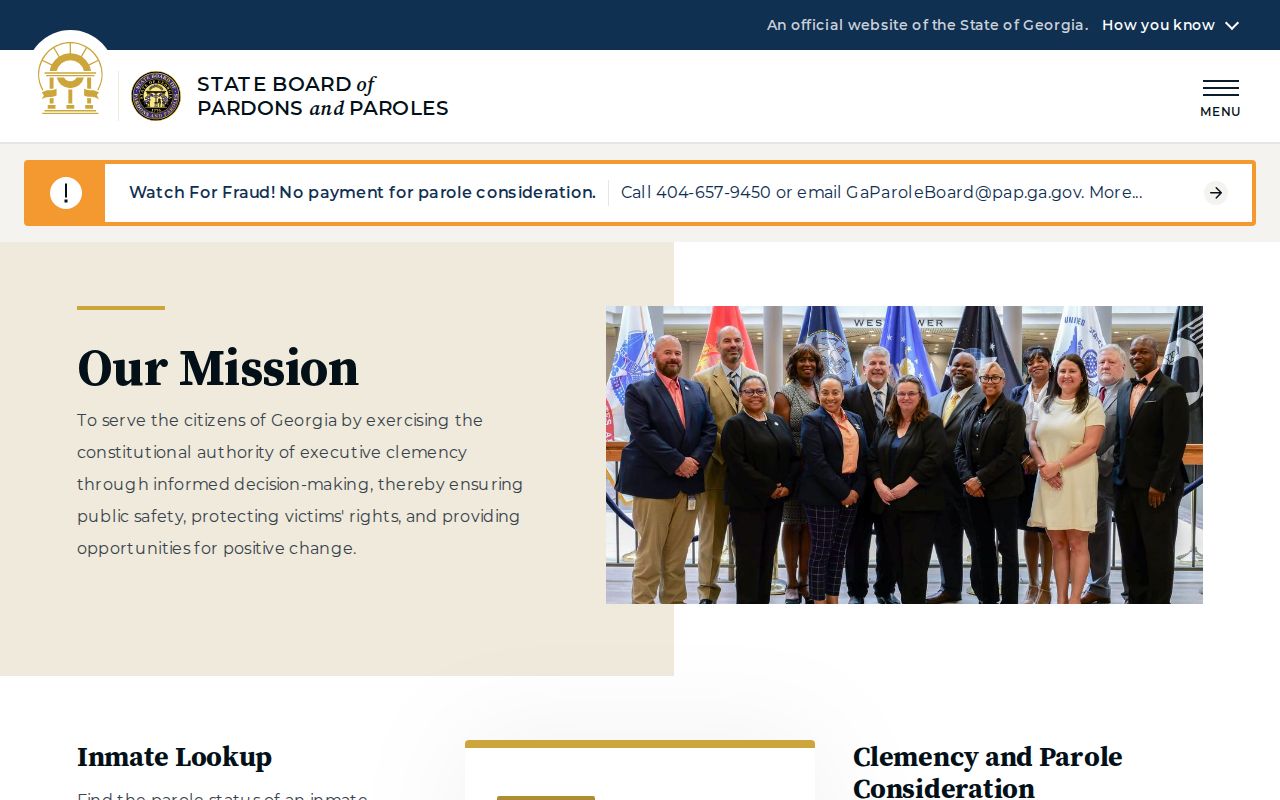
Use the board source for process and authority, then confirm the physical release through the latest GDC record.
Georgia Parole Meetings and Reviews
Georgia parole review is generally an administrative board process, not a courtroom-style public hearing held in Brooks County for each inmate. Board meetings and public postings may follow announced schedules, while individual case review follows eligibility and internal administrative timelines. A public board meeting calendar therefore should not be read as a personal inmate hearing list.
The parole process page is the stable source for how individual cases move through consideration. Brooks County court records remain useful for the conviction, offense category, and sentence, but the county docket does not become a parole-results search. Public decision clues may appear through GDC status, direct board communication, official publications, and later DCS supervision.
Possible outcomes include grant, denial, deferral, a tentative month set or changed, rescission before release, revocation after release, or discharge after completion. Each describes a different stage. If two records conflict, compare their update dates and ask the agency that created the disputed status. A news report or meeting photograph cannot substitute for an official individual decision.
The lack of a public case calendar does not mean no review occurred. It means the public access model differs from a local court docket. Use the GDC offender record first, then the board's official process and contact channels. Avoid inventing a Brooks County hearing date, public vote, or decision record that the official sources do not publish.
After a Georgia Parole Release
A final parole release moves the person from GDC confinement into conditional community status. The Georgia Department of Community Supervision becomes the field-supervision agency. The responsible office may follow the approved residence rather than the county of conviction, so a Brooks County case is not proof that every report occurs at a Brooks County location.
- Parole grant
- A board decision authorizing conditional release when final requirements are met.
- Revocation
- A process that may return a parolee to custody after a violation finding.
- Absconder
- A supervision status tied to alleged loss of contact or unauthorized departure.
- Discharge
- Completion or termination of the parole obligation.
If a violation is alleged later, DCS and parole records explain supervision while a warrant, revocation action, or new jail booking documents the enforcement stage. A person can be out of prison yet face a warrant, or be back in custody while an older release entry remains public. Read the dates and agencies carefully.
This statewide chain is the distinctive Brooks County angle identified in the research: court sentence, GDC custody, parole-board decision, actual release, then DCS field supervision. The sheriff roster does not replace any of those steps. Use Post-Release Supervision for the parole-versus-probation comparison.
For an exact release date, rely on the GDC release field or an official release record rather than the planned parole month. For the conditions and reporting office after release, use DCS. For the legal sentence that made parole review possible, return to the Brooks County court judgment. Keeping those sources separate prevents a planned review from being reported as a completed release.